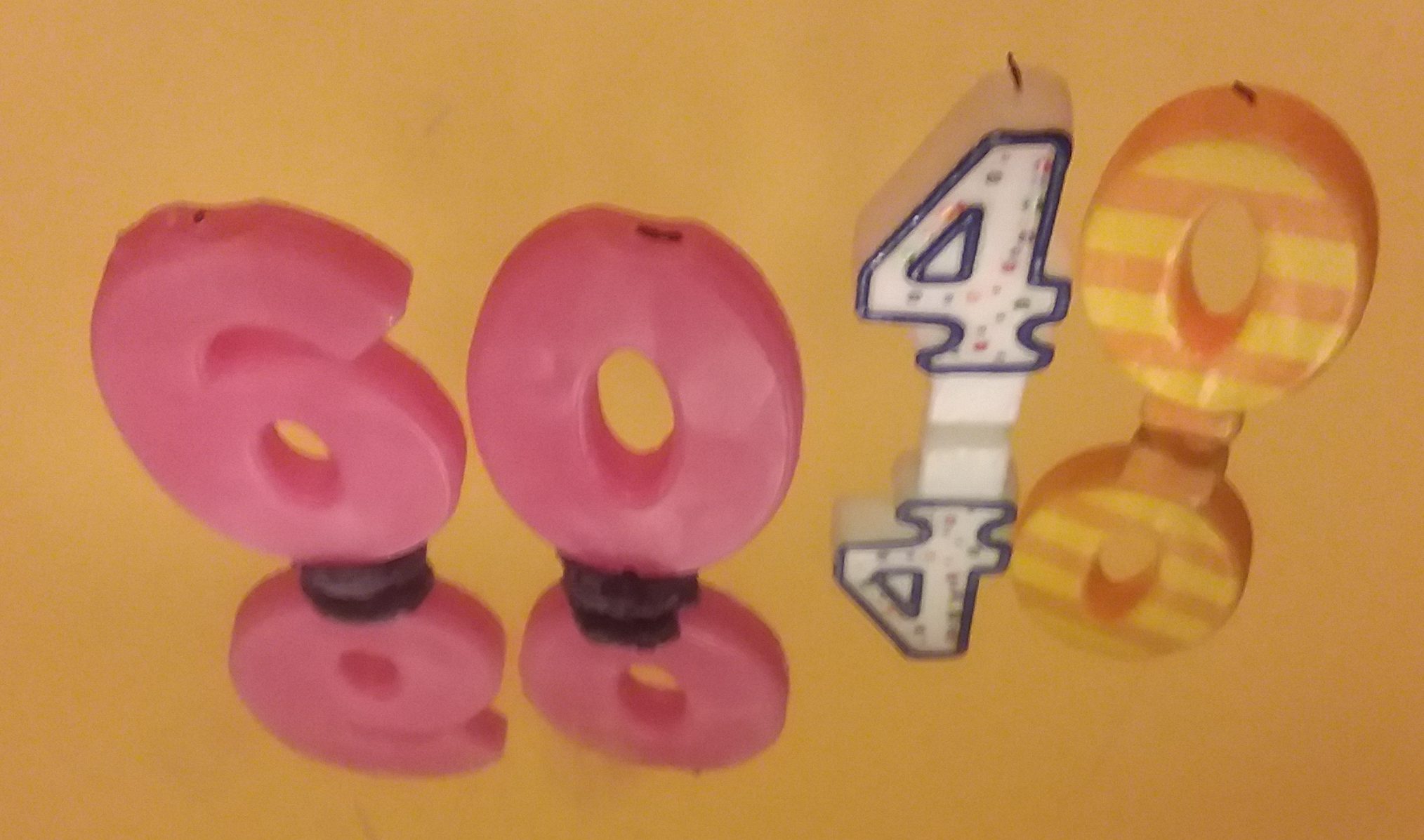
60: (May 2020)
“Tell me, what is it you plan to do with your one wild and precious life?” I’ve loved that last line from Mary Oliver’s poem “The Summer Day” for a long time, but it only recently hit me that it’s the word “wild” that resonates with me so strongly. Life is indeed precious, but wild? Not wild in the adolescent party sense of the word, but wild in the Thoreau sense of the word. Thoreau advocated walking at least four hours a day in order to be fully awake to one’s senses, to our own wild nature. This connection to the wild has the capacity to stir and enliven our own inherent animal nature to the core. “The most alive is the wildest. Not yet subdued to man, its presence refreshes him.” [from Henry David Thoreau’s essay “Walking.”]
I just finished an Environmental Studies Institute course at the Harris Center for Conservation Education (where I work), which explored this essay by Thoreau, as well as Ralph Waldo Emerson’s essay “Nature.” These readings and discussions made me reflect more on the fact that so many people are shut into urban apartments, especially now with the coronavirus, where there is little chance for a brush with the “wild,” let alone communion with it. I am very fortunate to be surrounded by a forest filled with all types of birds and their songs, visited by deer, fox, and even the occasional bear. At night I see the stars and hear the sweet sound of silence.
But even with all that, I do not have an experience of the truly wild. My nine-to-five job is mostly spent in front of a computer, even though I work for a nature center. Such is modern life. Our society is set up in a way that requires the bulk of one’s hours to be spent at work earning a living, and in this modern world, we’ve largely “freed” ourselves of working the land in exchange for working in an office.
I fantasize that maybe a new model is possible, where people have enough time in their lives to connect with nature in a deeper way throughout the week — or at all. Where people love nature enough to protect it. Where nature and what is wild is valued enough that we figure out how to create living and working spaces without obliterating our natural world in the process, (and ultimately ourselves).
If we care for the wild in the larger world, maybe we won’t lose touch with that essential part of our own selves. Perhaps we can collectively reconnect with that profound sense of what is wild, and in doing so, find our way home again.
40: (May 2000)
A friend asked me if I missed doing social work, the work I had done prior to having children. Although I do not miss it, I began to think about my initial motivation for becoming a social worker, which was to make the world a little better, and how, or whether, it was still alive in my life now.
It was not until I recently visited my mother and drove past my old graduate school that my thoughts began to crystallize. A memory of a class there flashed through my mind. The professor had asked me to discuss a “case,” and I recounted being with an elderly lady in a hospital the day before she died. She had asked me to rub her back and repeatedly mumbled, “I love you,” as I rubbed her skin. The professor pounced on me and spent the remainder of the class humiliating me by scoffing at my inability to maintain a professional distance in the relationship. I was too young and insecure at the time to say what I knew in my heart. I lacked the courage to say that to express love, in ways large or small, mattered as much as any other service I could provide. And likewise, allowing a “case” an opportunity to express love could be life-giving as well.
I have worked in programs for the elderly, in psychiatric wards, homeless shelters and soup kitchens, and in a court program for juvenile delinquents. Whether I helped people to wrestle with Medicaid forms, find a bed to sleep in, get a meal, or access drug programs, it was always clear that the most valuable thing I had to offer them was love.
And love was the very thing that that professor and other supervisors I encountered in various jobs counseled against, urging me to maintain emotional distance, separation, and clear boundaries. Yet over and over I saw that love was what people needed most, from the teenage boy crying out to me from his jail cell about his physically abusive father, to the Vietnam veterans living on the streets of New York City who desperately needed to believe someone thought they were worthy of more, to the old lady with no relatives or friends left in the world who wanted the comfort of a final back rub by a human being who cared that she was still alive.
Perhaps I will be a social worker again someday. I still passionately believe that we need to work on systemic problems of poverty and injustice. Meanwhile, we can all do the part of the job that matters most. The challenge is to be mindful of opportunities for simple connections between people: the ear to listen, a hug, a shared tear, or a back rub.
To me, that is what life boils down to. We can all love. It is what matters. I wonder if that overblown professor has learned that yet.
60-40:
Emerson writes in his essay “Nature,” “The invariable mark of wisdom is to see the miraculous in the common.” I think that at this particular point in time, there are a great many miracles. The miracle of health workers risking their lives to care for the sick. The miracle of people around the world uniting by doing simple things, like washing their hands more, and staying at home to keep everyone safe.
Acts of love are always miraculous in a way, because there’s always a choice to love or not to love. Each one of us makes myriad choices during the course of a day in which that choice is made – in our perceptions of how we experience life and in our actions. One life. Wild, precious, miraculous.
 60-40
60-40 
How gently you lead us, Lisa, as you connect the dots between Mary Oliver, Thoreau & Emerson, our pandemic, social work, a woman at the end of her life, a professor who could have learned something from you, and back again to Nature and Mary, and the reminder to truly live our one wild and precious life. Food for the soul and for the heart. Thank you for sharing your riches, how much wealthier I am now than I was 5 minutes ago!
LikeLike
Thank you so much, Jackie! 🙂
LikeLike
This touched my heart so much. I love YOU and your loving spirit! Thank you for sharing these beautiful thoughts.
LikeLike
Thank you so much! xoxox
LikeLike
Good morning Lisa,
I was stirred by your posts, both before and after. I loved the marriage of Oliver and Thoreau. Nicely done and provocative.
The prior post evoked memories of one professor in particular who was narcissistic and thankfully left when she got a PhD in sociology. Everything was about her and she would target one student in every class to taunt.
The breach of boundaries is never about love. Most of the breaches I have encountered have been about the worker trying to meet their own needs through the client, which is def not offering love. This is a big subject, esp in short term intervention situations where damage can be done by withdrawal of the worker.
Once in an interview, I said that sometimes the only thing you can do is reach out and touch the hand of the person in front of you. My soon to be supervisor said that was the reason he hired me. Your professor would have sent me packing….
Love, Joan
Sent from my iPhone
>
LikeLike
Thank you, Joan. You were very fortunate to have that supervisor! “The breach of boundaries is never about love.” That’s a great ‘Joan’ quote that I’m going to hang onto. You are definitely in the right profession. xoLisa
LikeLike