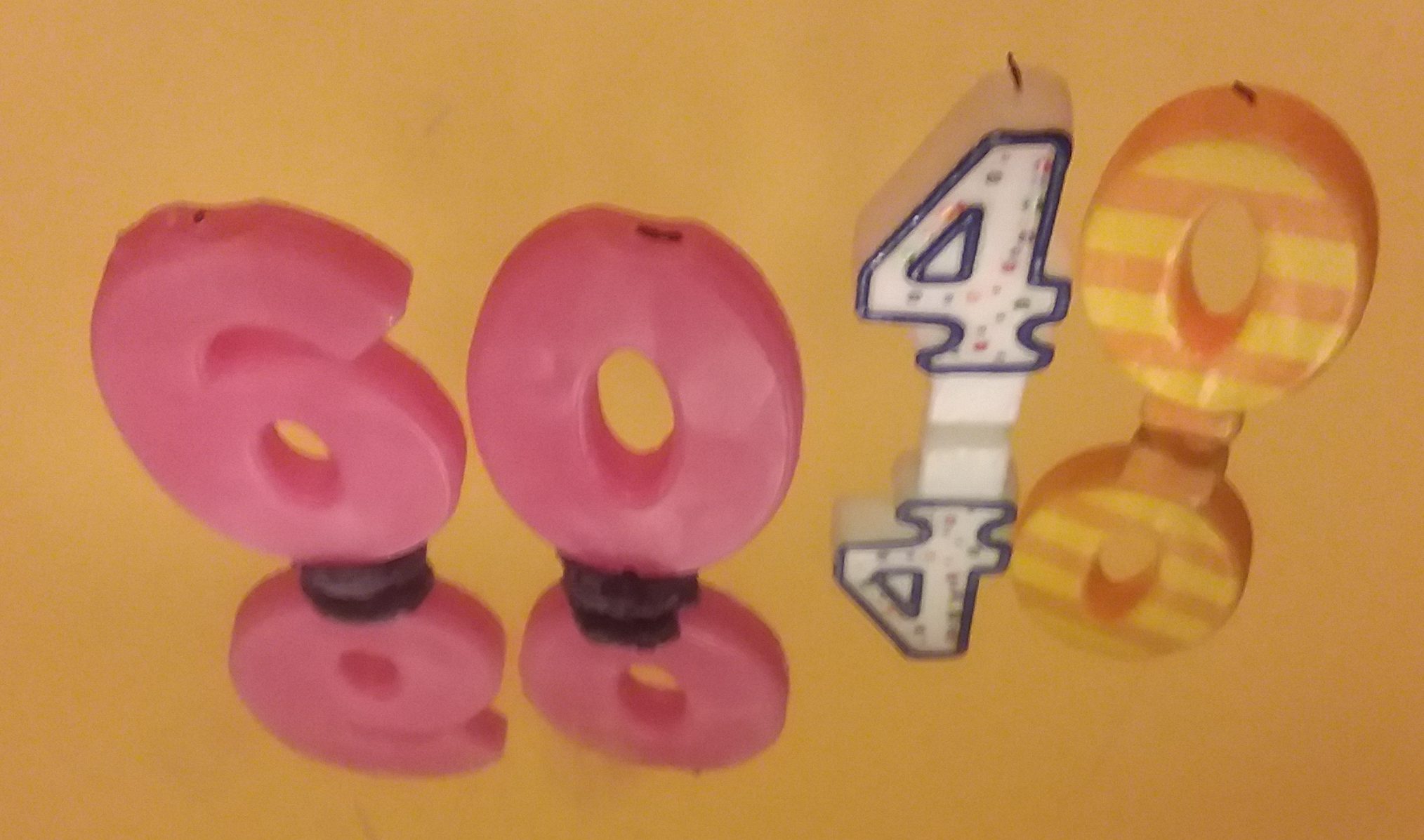
60: (November 2018)
My generation grew up with the maxim that politics and religion were subjects to be avoided in a wide variety of settings. They weren’t considered ‘polite’ conversation. I’m not sure when or how this was communicated to me, but my sense is that lots of people in my age cohort absorbed the same dictum.
So here we are in 2018 with a country that is politically polarized to the point of major dysfunction, and a world where religion plays a pivotal role in a majority of conflicts around the globe. Not talking about the important stuff hasn’t worked out very well.
Why do we shy away from talking about politics and religion? We don’t want to offend. We don’t want to get into an argument. Even within our own nuclear and extended families there can be lots of potential for explosive opinions on those subjects. I know there is in mine. So we don’t go near those topics very often.
But what happens when we avoid the hard discussions? As a consequence of that choice, we may unwittingly reinforce the polarization. It can then become second nature to dig into our positions and be less open to learning from another point of view. The ‘us’ and ‘them’ mentality becomes more entrenched.
As a society, we have lost the art of productive conversation, for meaningful collective discourse concerning these more sensitive topics. Instead, we spin webs of fear or ignorance around our protected views.
Disagreement is hard. Conflict is painful. Working through issues, seeing another point of view and working toward real understanding is difficult. It’s so much easier to avoid it. But just like in a personal relationship, if we sweep the hard stuff under the psychological rug, it begins to rot.
Not being willing to actively discuss the tough issues as a society, starting with our one-on-one relationships, is taking us down a dangerous path. Forging a healthy, loving society starts with the personal conversations we choose to engage in with the people in our lives — at home, at work, in our social circles.
We don’t need to avoid the thorny subjects under the guise of being ‘polite.’ There’s never been a better time to start talking.
40: (November 1998)
I have finally reached a decision. I am not going to dye my hair. “So what?” you may ask. It’s not like I have decided whether to be cremated, give up refined sugar, or sell my children’s crib. We’re only talking about hair.
Yet hair is a symbol of youth, or aging, as the case may be. I had to face two truths as I struggled with my decision. One, that I am vain enough to consider routinely pouring chemicals onto my head in order to try to look young and attractive. Two, that I have bought into the advertisement-fed cultural myth that being older, or showing signs of not being in the “young” category, is in fact unattractive, undesirable . . . just plain ugly.
I am vain. I do want to look attractive. But I want to be able to feel attractive even if I do not look young. This is not easy when there are people close to me who have openly expressed horror at my willingness to “let myself go.” These well-meaning folks clearly feel as if my signs of aging are repugnant. Hair color may in essence be inconsequential, but its symbolism is amazingly powerful. The fact that others can have so much emotion regarding my hair color may suggest that it is somehow threatening to them or their own self-image. After all, if I am growing older, it must mean they are, too.
Aging is justly linked with the ultimate and most vigorously repressed fear in our culture: death. Gray hair is a visual reminder of our compulsory involvement with this life and death process. We resist confronting the unknown questions and fears surrounding death by desperately trying to prove our immortality. The advertising world fuels this collective fear with their relentless promotion of youth-simulating products, intentionally linking aging with a lack of beauty. Yet to persist in such a myth is false.
Leaving my ever-increasing strands of gray hair bared and glistening for the entire world to see is a declaration that I will not succumb to the myth. Yes, I am aging, I am graying, and I will not try to mask it in shame! My daughters will grow up with a role model who encourages them to see that we are all in the process of both living and dying.
But it’s hard for me. Would I be compromising my values too much if I put in a rinse now and then for special occasions?
60-40:
I don’t think a year has gone by in the 20 years since I wrote that piece on gray hair when a well-meaning extended family member has not strongly urged me to dye my hair. But the truth is, I am at peace with who I am, gray hair and all. If I look ‘old’ (my age), it means I’ve lived a long time, and I’m okay with that. I feel fortunate to have made it this far!
Perhaps we would start to see a shift in polarities if we went easier on the people who cross our paths in life. We need to soften, whether it’s about hair color, politics, religion, or any other potentially contentious issue, big or small. This doesn’t mean putting up walls and ignoring differences; it’s figuring out how to productively communicate about them instead.
Maybe if we start with kindness, with a desire to find common ground and our shared humanity, we would listen to each other and learn. If we talk to each other, even about the hard things, we could grow. We might even lift each other up. One conversation at a time.


Lisle,
You look exactly the same, to me, as the first time I met you! Your beautiful heart and soul shine through you eclipsing all else and your gray hair is your halo. Thank you for another soul cleansing essay….. I always feel so much less alone after reading 60-40……..Love you!
LikeLike
Love YOU!!! Thank you so much. We are indeed all in this together! 🙂
LikeLike
True at both 40 and 60. Great posts!
Sent from my iPhone
>
LikeLike
Thank you so much, Joan!
LikeLike